

Welcome to week 2 of Book Club, friend.
The questions and engagement with the reading in the discussion section last week was great; I can’t wait to hear your thoughts on the treasures buried in this week’s chapter!
Now that Athanasius has laid the backdrop for his book, he begins the process of unveiling the many facets of his real subject. And though it is multi-faceted, he designates Chapter 2 as a description of “the first cause1 of the Savior’s becoming Man.”
This chapter describes the initial impetus of our God’s Incarnation. Let’s begin.

“once transgression had begun, men came under the power of the corruption proper to their nature and were bereft of the grace which belonged to them as creatures in the Image of God.” (p. 49)
Man was created subject to corruption—bodies made of the type of stuff that degrades, decays, and dies.
Yet Man was created to live forever—their natural proclivity to decay held at bay by their unity with the Source of Life.
They stood as the pinnacle of Creation—to be most admired as those who uniquely shared in the Nature of the Source of Life.
Our Ancestors experienced Eternal Life: knowing God—as those who walked with Him, side by side, in the Garden—and ignorant of Death through the incorruption secured for them by their relationship with the Life.
But they forfeited their high and honorable position in Creation for a Fruit—good for food, a delight to the eyes, and to be desired to make one wise.
But a Fruit which, in the day that you eat of it you shall surely die.
The source of those last two passages in italics is Genesis 2 & 3. This is where the crux of Athanasius’ argument lies.
Man was created and placed in this high and honorable position to image God and rule over Creation with Him, but with one command—if disobeyed, incurring the death penalty.
We know the story. They took the forbidden fruit, doubting the goodness of God. And so, we are left with what Athanasius calls:
The Divine Dilemma
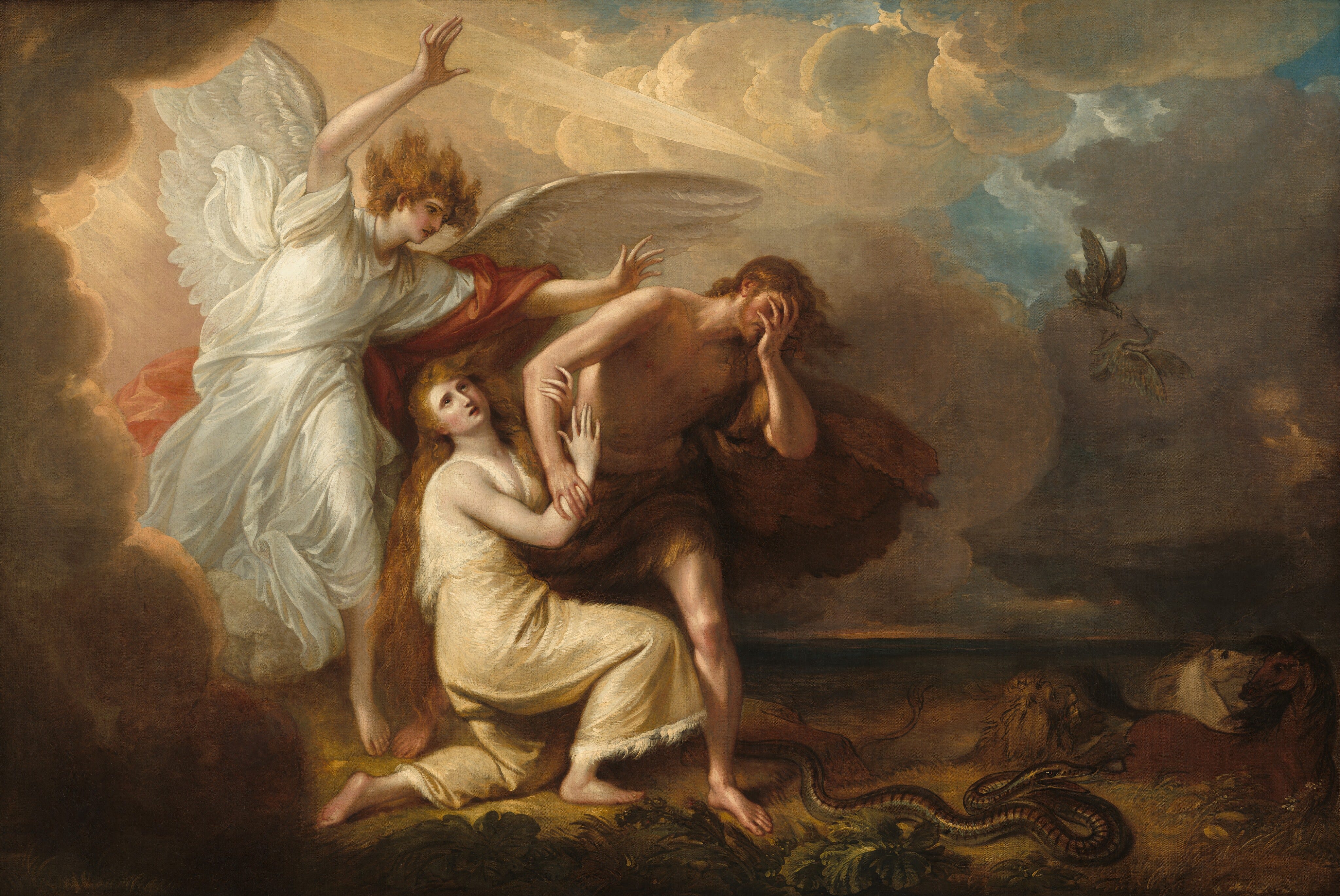
“It would, of course, have been unthinkable that God should go back upon His word and that man, having transgressed, should not die; but it was equally monstrous that beings which once had shared the nature of the Word should perish” (p. 47)
He goes on to explain in more detail the many reasons this dilemma is so complicated and pressing, but I think the heart of it is the glory of God.
“it was supremely unfitting that the work of God in mankind should disappear, either through their own negligence or through the deceit of evil spirits.” (p. 48)
God’s perfect, righteous, and Good plans ought not be thwarted by anything. Indeed they cannot. So how does God resolve the dilemma?
“By man, death has gained its power over men; by the Word-made-Man, death has been destroyed and life raised up anew.” (p. 55)
This is how God resolves the dilemma. This is how He keeps His word. This is how He vindicates His Goodness. This is how He makes Right all that others have made Wrong.
“the incorporeal and incorruptible and immaterial Word of God entered our world.” (p. 50)
The Word, through whom God created the world, saw the state of the world. He saw Man “wasting out of existence.” He saw Death reigning as king. He saw all things plunging deeper and deeper into the chasm of corruption. Yet He also recognized the necessity of God’s word to be upheld, the word that pronounced Death upon the world.
“All this He saw and, pitying our race, moved with compassion for our limitation, unable to endure that death should have the mastery, rather than that His creatures should perish and the work of His Father for us men come to nought, He took to Himself a body, a human body even as our own.” (p. 51)
He, the instrument of Creation, formed for Himself a human body in the womb of Mary. The Word then became flesh. God became Man. This He did to vindicate the word and goodness of God paired with His intense compassion and love for Man—for the glory of God and the good of Man.
Using the passages Athanasius includes at the end of this chapter, we see that the purpose of the Word taking a body was so that He could die. The Word, who cannot die, took a body that was capable of death so that He could do what must be done to save Man and uphold the word of God.
He was of such supreme value that giving over His single body as a sacrifice for sins was sufficient to offer forgiveness to all. And because His body was united to the Life, He “put an end to corruption for all others as well, by the grace of the resurrection.” (p. 52)
Truly, truly, I say to you, unless a grain of wheat falls into the earth and dies, it remains alone; but if it dies, it bears much fruit.
God took a body so that He was able to die. His entire purpose of becoming Man was to fall into the earth and die. Why?
“by the sacrifice of His body, He did two things: He put an end to the law of death which barred our way, and He made a new beginning of life for us, by giving us the hope of resurrection.” (p. 55)
If He did not die, then all must die.
If He did not rise, then none could rise.
But He did die; and by dying, destroyed Death and ushered in Eternal Life. The Great Paradox—through the weakness and humiliation of the cross, God shows Himself supremely powerful and glorious.
“the human race would have perished utterly had not the Lord and Savior of all, the Son of God, come among us to put an end to death.” (p. 53)
Left to ourselves, we are without hope in the world—steeped in corruption and hurling towards Death.
As for me, I am poor and needy, but the Lord takes thought for me. You are my help and my deliverer; do not delay, O my God! (Ps. 40:17)
He looked and saw our poverty. He took thought for us. He did not delay. He came and delivered us. He took on flesh and died to save us.
Now we are rich in Christ. Now Death has no claim on us. Now we shed the corruption which once covered us. Then we shall see Him, and be made like Him—eternally restored to that high and honorable position from which we fell.
Now it’s your turn!
What insights did you come upon in this chapter?
Did any aspect of the work of Christ become more clear while reading?
Did you find any points of disagreement?
Were there any ideas you’re still confused about?
Share with us in the discussion section below!
Next week’s reading will be Chapter 3. See you there!

Emphasis mine.
This chapter was a great reminder of Christs sacrifice and some of the reasoning that goes along with why He did what He did.
My question to you is:
Was Athanasius a Universalist?
On page 51 he says -
“Thus, taking a body like our own, because all our bodies were liable to the corruption of death…”
All either means everyone (which would be true biblically as Romans 3:23 says) or it means all of us believers, but It seems to me he is referencing all of humanity because he says all of our bodies which we know is true of unbelievers as well.
He goes on to say -
“This He did out of sheer love for us so that in His death all might die, and the law of death thereby be abolished because, having fulfilled in His body that for which it was appointed, it was thereafter voided of its power for men”
The unspecific words he uses here makes me think he’s talking of humanity as a whole and not believers. It would have been very easy to qualify this statement of “men” to “men who have put their faith in Jesus”. Because his previous “all” and his later “all” are not qualified by words like believers or unbelievers, this leads me to believe he made no distinction in his own theology and was universalist.
He also says on page 52 that he thinks Christs death has put an end to corruption for all others. Again this is a weird way to put this if he wasn’t a universalist.
We as Christian’s believe death has no hold on us because of what Christ accomplished on the cross. Correct me if I’m wrong, but I would say death still has a hold on unbelievers but Athanasius seems to believe that the “corruption of death has ceased to be” (p. 53). Maybe my theology is wrong here so correct me if I’m off base.
Sorry for the long response but I wanted to bring up most of what I noticed while reading. Let me know what you think!
Okay this chapter spurred on so many thoughts! Here's some word vomit!!
- I loved Page 48-49. Restorer and Redeemer is who God is; it is His nature. He had no other choice but to intervene and save because it's what He does. He restores. He redeems. He makes new. There is no way He could've neglected us and left us to our own destruction because it goes against the very character of God. Praise God!
- Page 50 explains why we needed Jesus to know God deeper. He stooped to our level to show us Himself in a way we can understand and grasp. He wants to be known! He wants to be near! He is not a far-off God. Praise God!
- Page 51 says, "make them alive through death by the appropriation of His body and by the grace of His resurrection. Thus, he would make death to disappear from them as utterly as straw from fire." And it just had me thinking, do I live like this is true? Do I live like death has no claim on me because of Christ's death and resurrection? It's so empowering to remember this truth!
And now for my many, many questions 😄
- Right at the beginning of the chapter he explains how the human race is in the process of destruction, was disappearing, and God's work was being undone. I could think of two different views Athanasius could hold (maybe there's more). Do you think Athanasius held the view that humanity is progressively getting worse and worse and growing deeper and deeper into sin as the generations come (pessimistic end times view)? Or do you think he is saying that humanity has already entered into their full capacity of destruction and we need God's grace to keep us from getting there? I'm curious because with the first view, would he believe that we are 'further from God' today than the people who lived 1000 years ago?
- Page 49 says, "men came under the power of corruption proper to their nature." I just need help understanding what he means by 'proper to their nature.'
- On Page 50 he says, "He saw, too, how unthinkable it would be for the law to be repealed before it was fulfilled." I'm confused on how the law was going to be repealed in Athanasius's hypothetical scenario. What is he talking about here?
- I also just need help processing HOW Christ's death defeated death. HOW is it that corruption dies through Christ's death? I'm thinking the answer has something to do with unity to Christ and the great exchange... Christ took on the death of His church so that His church wouldn't have to die? Can someone put this into their own words so I can keep processing it? 😆